How to Improve your riding - Eating, Cross Training and Racing your Mates
22 May 2013 | By AngusMcIntosh | 2 CommentsWe love hearing from you lot and seeing what you have to say! I received an email from Ben Adams not so long ago who reckoned he had a good idea for an article on how training could improve your riding... He fired it over, we loved it, hey presto your reading it!
You think you've got a great idea that we should be publishing on MoreDirt? Find out how here...
With summer fast approaching and the trails looking as dry and dusty as ever it’s time to start shredding the trails hard.
Hopefully you have been riding throughout the depressing mud bath that is the British winter (and often summer) to make the transition as easy as possible but here’s some advice that should help you ride harder for longer. If, like me, you’re planning on racing this year then this is even more important.
First things first, your diet; it probably needs work. Building up your layer of winter insulation is no longer an excuse to eat that extra slice (or slices) of cake and Christmas and Easter are long gone so seasonal weight gains are a thing of the past, until next year anyway, so you better trim those pounds. It’s cheaper and more efficient to lose your own weight than spend too much on pimp upgrades for your bike anyway. Unless you are a pro athlete riding for hours on end each day you probably don’t need to be eating much more than your average person unless you’re looking to bulk up a bit anyway. Rather than trying to eat an extremely healthy diet and meticulously measuring out your carbs and fats just eat a regular balanced diet. Pick a few things from each group whilst eating a fairly minimal amount of the last bullet point.
- Fruit and vegetables.
- Starchy foods, such as bread, rice, potatoes and pasta. Choose wholegrain varieties whenever you can, or eat potatoes with their skin on for more fibre.
- Meat, fish, eggs and beans.
- Milk and dairy foods.
- Foods containing fat and sugar.
It may be helpful to eat supplements such as Power Bars (and other brands) to gain some ‘clean’ energy especially on longer rides.
On the bike
Try riding hard for a short period of time and then relaxing for a period of time. Try 1 minute of hard riding followed by 1 minute of an easier pace repeating this 10 times. Not hard enough? Try doing it up a short steep hill where in your rest periods you are going back to the start of the hill.
If you ride in a group try timing each other through sections of trail and trying to beat other, it’s surprising how fit you are when you have to compete with your friends, it’s also good motivation to ride faster when not racing them to try and get fitter and destroy them next time. You can choose the sections based on what you want to improve, choose a technical section if you want to improve your skills and techniques and if you want to improve your fitness use a more flat or uphill pedal powered section. Another option is head to head sprints up hills with them; it’s probably not a good idea to do head to head races on off road trails as over taking opportunities will be few and very risky.
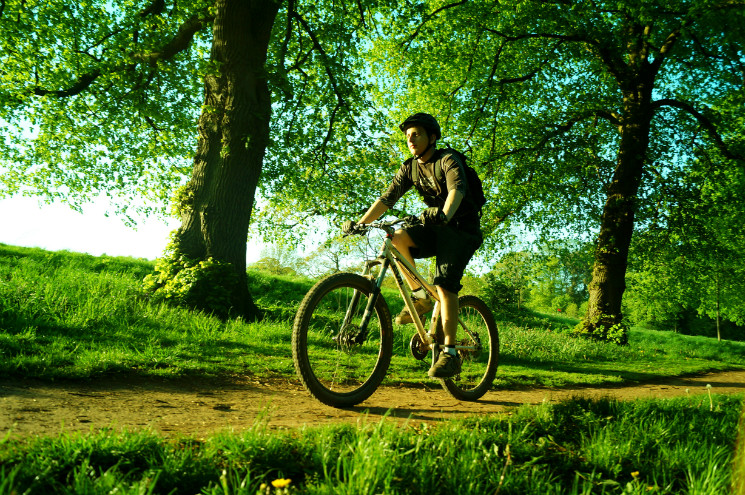
If you ride alone try timing yourself through sections of trail and trying to better yourself this way, the same applies as above, skill improvements by technical trails and fitness improvements by more uphill or flat out pedalling. If you have a smart phone, apps such as Strava will allow you to time yourself around your local loops and even tell you your speed through sections and compare them with online leader boards.
If this all sounds like too much work then the simplest option is to just ride more often and go harder.
Cross training
As fun as it is to ride your bike mixing up your training by trying other sports can also be useful. Running is probably the most obvious one and is without a doubt a great way to improve general fitness, not much explanation is needed here I don’t think; run as far as you can and then improve it each time. However a great way to increase the benefits further is hill sprints.
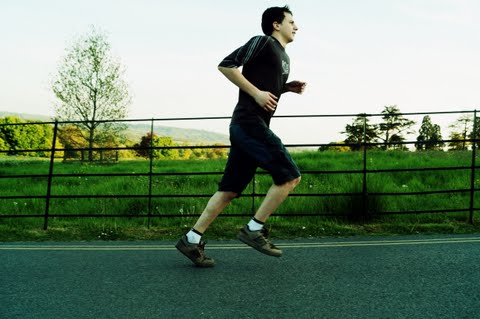
Make sure you warm up properly with 5-10 minutes of light exercises to prepare yourself such as star jumps, body weight squats, high knee running and butt kicks etc. Using a hill that is about 20-40 metres long do your first run at about 60% effort, and then 70%, 80%, 90% and then you will be ready. Sprint that hill about 5 times as hard as you can. Take as much rest as is appropriate in between runs, make sure your heart rate is still elevated but you want to make sure that you still have good form to maximise the benefits, about 2-4 minutes should be a good balance. This will be good for your first few sessions. A good session when you get used to hill sprints is:
- Sprint hill
- 15 push ups
- 15 squat thrusts
- Walk to bottom of hill
- Repeat 5-10 times
You can mix this up as much as you want to though with different exercises to add variety and increases difficulty.
Doing pretty much any sport will provide you with additional benefits so try to find something else you enjoy whether it’s football, swimming, rowing, basketball or whatever other activity you can think of. My personal favourite is Brazilian Jiu Jitsu (look it up, you’re at a computer!), it’s an intensive workout, not as damaging as things like boxing or Judo, and you learn practical skills that the traditional and mystical martial arts miss out. There’s nothing more tiring than wrestling someone who outweighs you by 10 stone so your cardio will improve greatly and if you compete, like I do, then you have great amounts of motivation to keep an eye on your weight, no one wants to be the smallest in the next weight division.
Hit the gym.
Squats, dead lifts and bench presses are all great and muscle mass is helpful in protecting against injuries when you crash. Remember though, you are not a body builder so don’t train like one, bicep curls and other isolation exercises aren’t really needed and waste time and so focus on your core lifts and improving power. Look into ‘Starting Strength’ for an idea of what I’m saying. One more thing, don’t get too big, those big muscles drain your oxygen supplies and you have to carry it up hills with you.
Just remember:
"There are no shortcuts to any place worth going."
- Beverly Sills
This is a marathon not a sprint and if you don’t see immediate improvements don’t be disheartened just train harder tomorrow, could you beat the you of yesterday? If so then good job you can relax for now, if not then why are you still sat here?
This should be enough for an introduction I should think, so hit those trails!
Do you agree with everything Ben has to say? Tell us what you think below!




benadams replied on: 24 May 2013 16:47
Thanks Angus!